A RELAXED WEDDING DAY
Most couples want beautiful wedding photographs. Very few want to spend their wedding day taking them.
And I think that distinction matters.
A good wedding timeline should give us enough space to create beautiful photographs without making photography the centre of the day. You should have time to talk to your guests, enjoy your dinner, have a drink, laugh with your friends and actually experience the celebration you have spent so long planning.
After photographing weddings for many years, I have learned that the best timelines are not necessarily the ones with the most time allocated to photography. They are the ones that put the right amount of time in the right places.
Photographing weddings regularly at venues such as Markree Castle has taught me how much the rhythm of a wedding day matters.
Sometimes I will take control because experience tells me that something needs to happen now. I might organise family photographs quickly, find better light, move a portrait session by twenty minutes or suggest stepping outside for ten minutes when the evening light suddenly becomes beautiful.
At other times, the best thing I can do is absolutely nothing.
If your dad is telling a story, your friends are laughing at the bar or something unexpected is happening around you, I do not want to interrupt it because the timeline says we should be taking photographs somewhere else.
That balance between planning and knowing when to let go of the plan is one of the most important parts of how I photograph a wedding.
This guide is not about creating the perfect photography schedule. It is about building enough structure into your wedding day that you can stop thinking about the schedule altogether.
Because your wedding is not a photoshoot.
You don’t have to perform your wedding day. You just have to live it.
BUILDING THE TIMELINE
Start With the Ceremony Time and Work Backwards
The easiest way to build a relaxed wedding day timeline is to start with the parts of the day that cannot easily move.
The ceremony time is usually the most important one.
From there, I work backwards. What time do you need to arrive? How long is the journey? When should you be dressed? When does hair and makeup need to be finished? Are there photographs or moments you would like to have before leaving?
The important thing is not to fill every available minute.
I want breathing room between the important parts of the morning because small delays are completely normal. Hair may take a little longer, flowers may arrive later than expected, someone may need help with a dress, or you may simply want five minutes to sit down and take everything in.
If there is no space in the timeline, a fifteen-minute delay can suddenly make the whole morning feel rushed. If we have built in a little flexibility, the same delay may change absolutely nothing.
As a general rule, I like the bride to be fully ready around one hour before she needs to leave for the ceremony.
That does not mean we spend the next hour taking photographs. Quite the opposite.
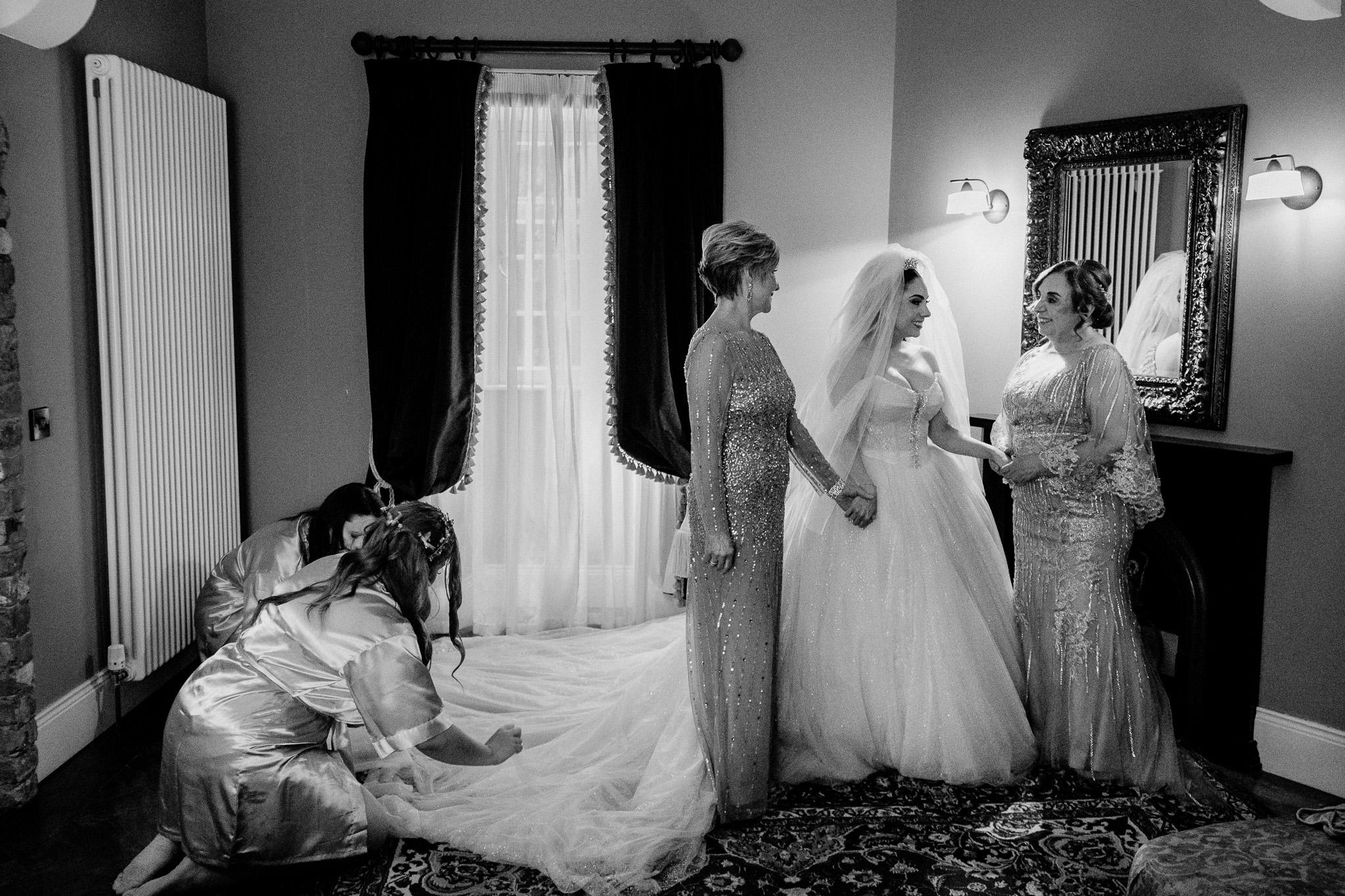
It gives us breathing room if hair or makeup runs a little late. But when everything is running on time, it also gives us space for a few photographs that I think are worth having: a portrait of the bride, photographs with mum and dad, and at least one photograph with the bridesmaids.
These do not need to become long portrait sessions. Usually a few minutes is enough.
What matters to me is what happens afterwards. I want those photographs finished while there is still time for you to sit down, take a breath and enjoy those final ten or fifteen minutes before leaving. That quiet moment before the ceremony can be far more valuable than squeezing another ten photographs into the morning.
This is also why I do not believe in creating one standard wedding timeline and giving it to every couple. A ceremony at your venue is different from a church ceremony thirty minutes away. A morning with two people getting ready is different from one with eight. A first look changes the structure again.
We start with what is fixed, understand what matters to you, and build enough space around it for the morning to still feel like a wedding morning rather than a schedule you have to keep chasing.
THE WEDDING MORNING
Give Your Wedding Morning Breathing Room
A relaxed wedding day usually starts with a relaxed wedding morning.
Hair and makeup can run late. A button can take longer to fasten than expected. Someone disappears to find the flowers. A bridesmaid cannot find her shoes. None of these things are a problem unless the timeline has been planned so tightly that every five minutes matters.
This is why I would always rather build a little extra time into the morning than ask everyone to move faster just as the emotions are beginning to build.
That breathing room is not empty time. It is often where some of the most meaningful moments of the morning happen.
Your mum sees you properly in your dress. Your bridesmaids suddenly become emotional. Your dad walks into the room. You have a few minutes to look at yourself, sit down, talk to the people around you and realise that the wedding is actually about to begin.
These moments cannot be scheduled precisely. We can only create enough space for them to happen.
I also do not want the final part of the morning to feel like a photography checklist. Once we have the photographs that matter, I would rather put the camera down for a moment than keep creating more simply because we have time available.
The aim is not to squeeze as much photography as possible into the morning. It is to make sure you have the photographs you will care about while still allowing you to experience this part of the day.
If you would like to go deeper into this part of the timeline, I have written a separate guide with practical tips for creating a stress-free wedding morning.
AFTER THE CEREMONY
Think About What Happens Immediately After the Ceremony
The first thirty to sixty minutes after the ceremony can have a surprisingly big impact on how the rest of your wedding day feels.
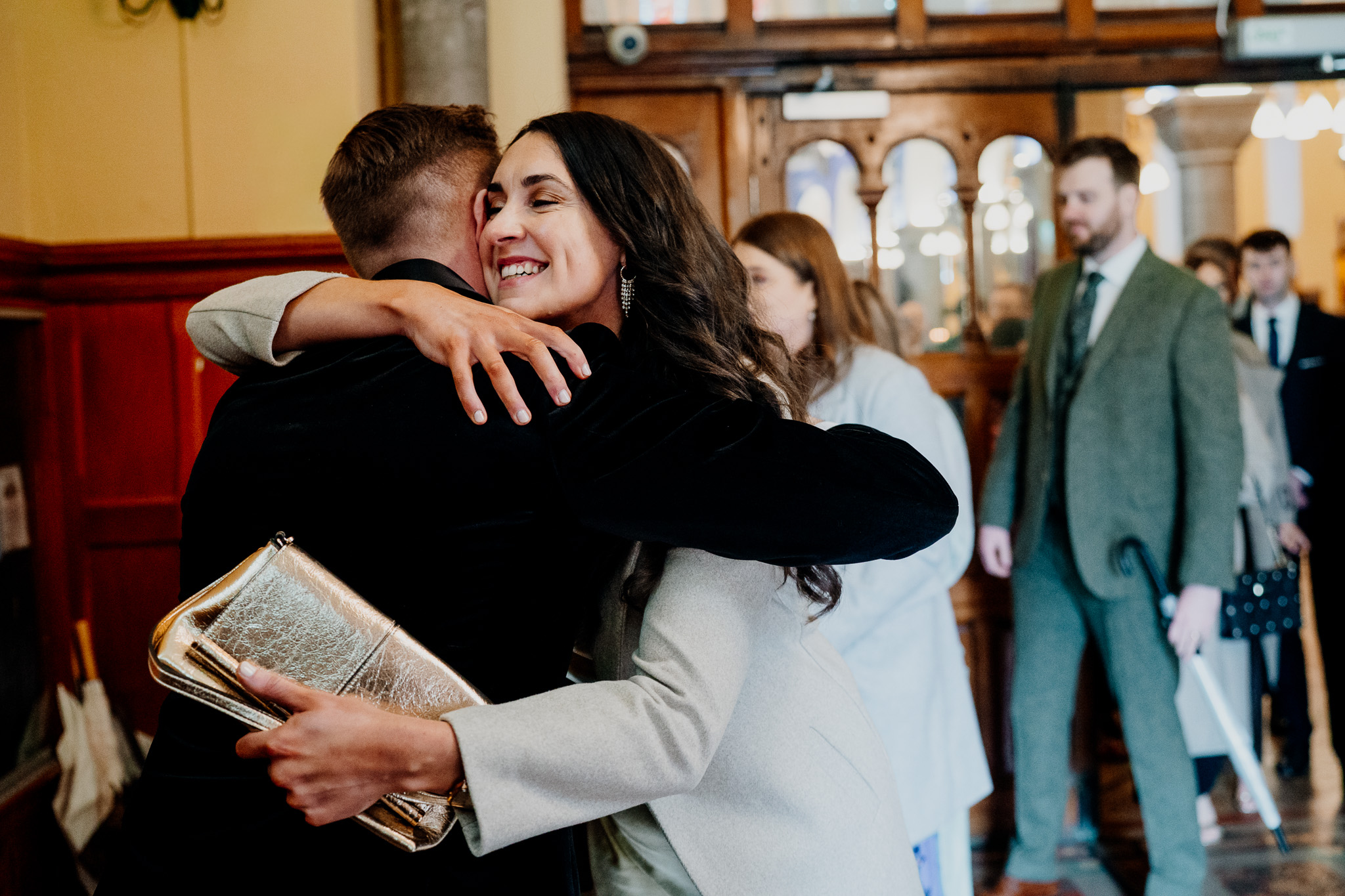
This is the moment when everyone wants to see you. There are hugs, congratulations, family photographs, drinks, conversations and often a couple portrait session still to fit in. If all of these things happen one after another without a plan, it is very easy for the couple to spend most of their drinks reception away from their guests.
One thing worth thinking about before the wedding is whether you actually want a traditional receiving line after the ceremony.
With 100 guests, individual congratulations can take quite a long time. Everyone naturally wants to hug you, say a few words and wish you well. There is absolutely nothing wrong with that if this moment is important to you.
But it is worth understanding what that time may replace.
If congratulations are followed by family photographs and then a couple session, you can suddenly return to your guests just as they are being called for dinner or speeches.
Sometimes I suggest a different approach.
If everyone is already together after the ceremony, it can be the perfect opportunity to organise family photographs immediately, before people disappear towards the bar, their rooms or different parts of the venue.
Weather can influence this decision too. At Markree Castle, for example, if there is light rain after a ceremony in the chapel, I may use that moment to organise the family photographs indoors while everyone is still nearby.
Then I keep watching what is happening outside.
If the rain stops and we suddenly have a fifteen-minute window, I might say, “Guys, this is our chance. Let’s go.”
For a couple who has travelled from abroad to get married in an Irish castle, having a few photographs with the castle and landscape around them may be genuinely important. We do not need to turn that opportunity into a long photoshoot. We can make those photographs quickly and get the couple back to their guests.
The question I am always asking is not simply, “When should we take the photographs?”
It is, “How can we organise the photographs you care about while taking as little time as possible away from your wedding?”
FAMILY PHOTOGRAPHS
Keep Family Photographs Simple and Organised
Family photographs are important. They are also one of the easiest parts of a wedding day to let grow far beyond the time they actually need.
The photographs themselves are usually quick. Finding the people is what takes time.
Someone has gone to the bar. Someone else is checking into their room. An uncle has disappeared outside. Before you know it, five minutes of photographs has become twenty minutes of waiting.
This is why I prefer to keep the family list focused on the photographs that genuinely matter and organise them efficiently.
One of the most useful things a couple can do before the wedding is choose one person from each side of the family who knows everyone well.
I call on these people when we are organising the family photographs. Someone from the bride’s side can quickly find the right aunt, uncle, sibling or grandparent, while someone from the groom’s side can do the same for their family.
It sounds like a very small detail, but it can save a surprising amount of time. I may know every name on the family photograph list, but I do not necessarily know what every person looks like. A relative who knows everyone can spot a missing person immediately and bring them over while I continue photographing.
When possible, I also like to take family photographs while everyone we need is already nearby. The few minutes immediately after the ceremony can sometimes be much more efficient than trying to gather the same people later during the drinks reception.
I normally work through the groups in a logical order, releasing people as soon as they are no longer needed rather than keeping everyone standing around waiting.
This does not mean family photographs need to feel rushed. It means they are organised.
There is also a difference between the formal family photographs and the photographs of your family that happen naturally throughout the day. A short formal list gives us the photographs that are important to have, while the rest of the day gives me opportunities to photograph the hugs, conversations, laughter and relationships that cannot be put on a list.
My goal is simple: make the family photographs properly, make them efficiently, and then let everyone get back to the wedding.
COUPLE PORTRAITS
Your Couple Portraits Don’t Need to Take an Hour
You do not need to disappear from your wedding for an hour to have beautiful photographs together.
In many situations, I would much rather have fifteen good minutes at the right time than forty-five minutes simply because that is what was written into the original timeline.
The right time depends on the wedding.
It might be immediately after the family photographs because the weather is good and we already have everyone where they need to be. On an Irish wedding day, it might simply be a fifteen-minute window between two showers.
Sometimes we will go outside, make a few photographs and the rain sends us straight back inside. Other times it may be completely dry, but the midday sun is harsh and I know that continuing for another twenty minutes is unlikely to give the couple anything significantly better.
In that situation, I am very happy to stop.
If we already have a few photographs that show the couple, the venue and the reason they chose that place, I would rather send them back to their guests than keep them outside simply because we planned a longer portrait session.
I know we can use the day again later.
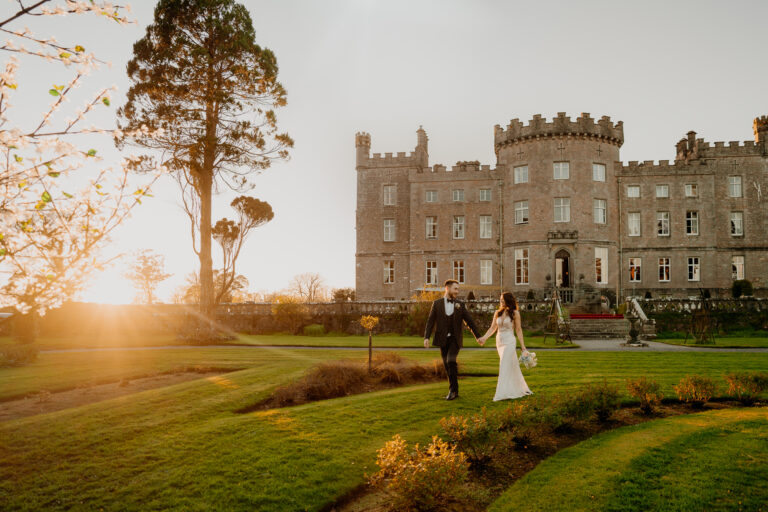
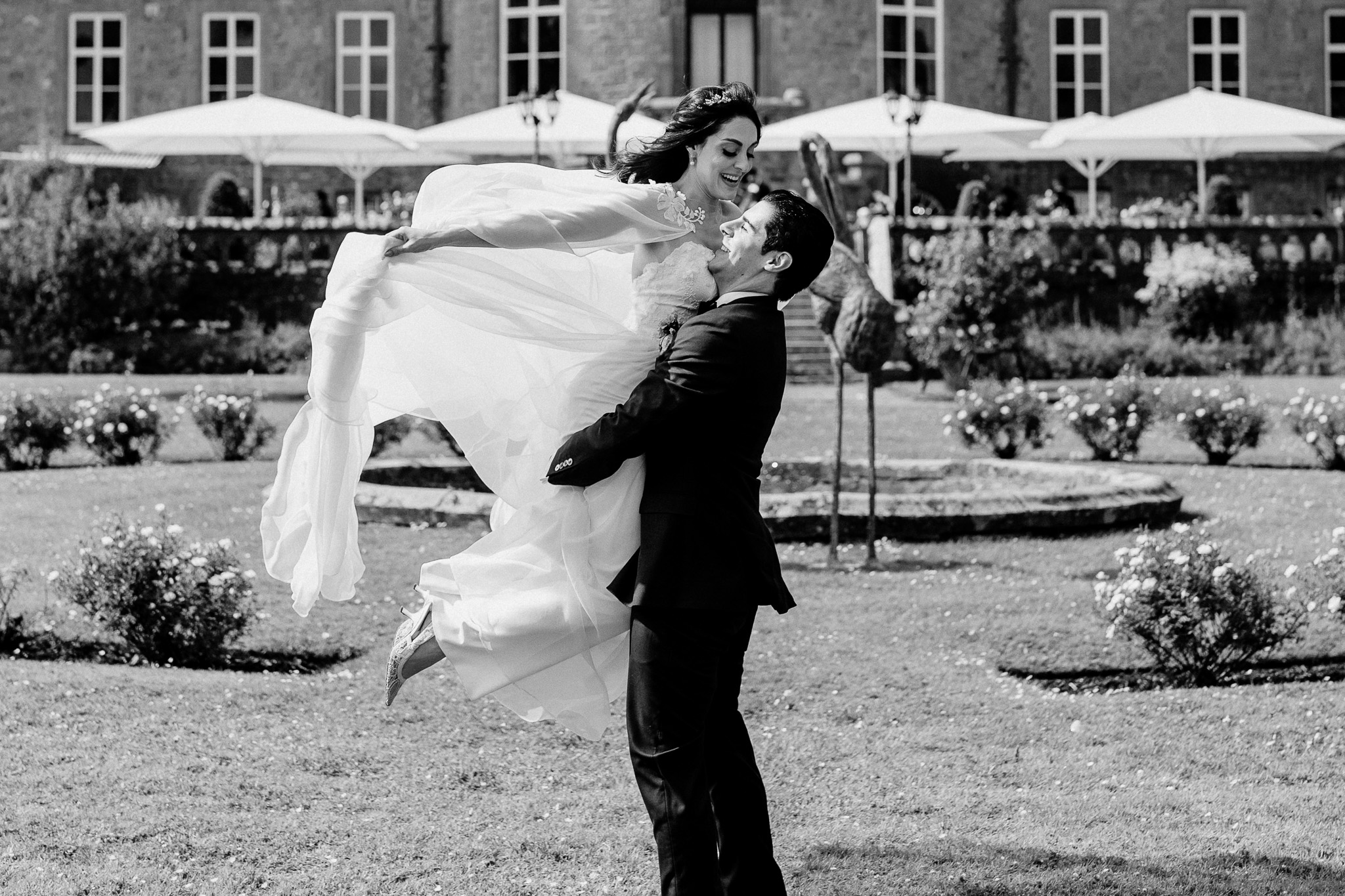
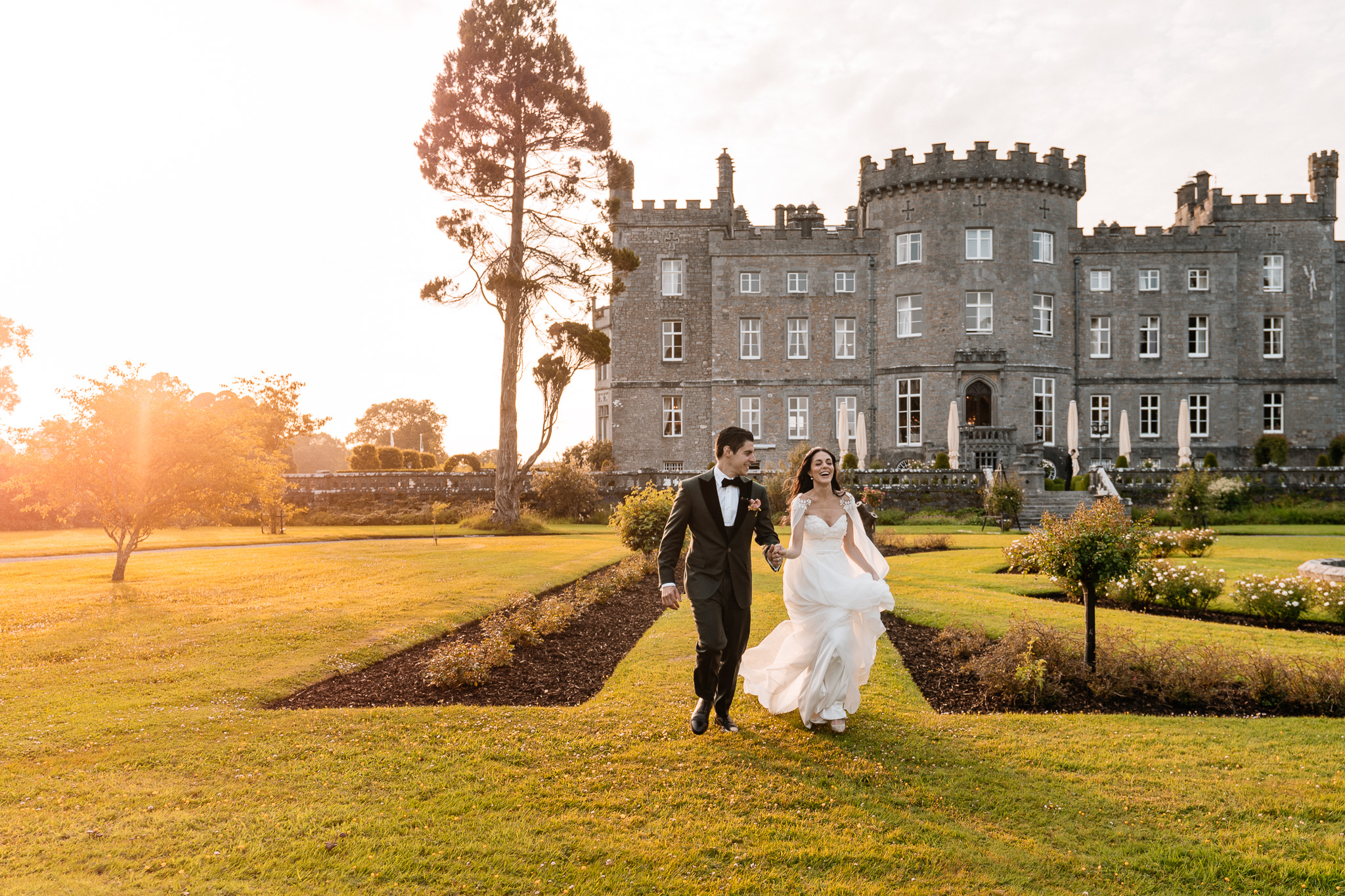
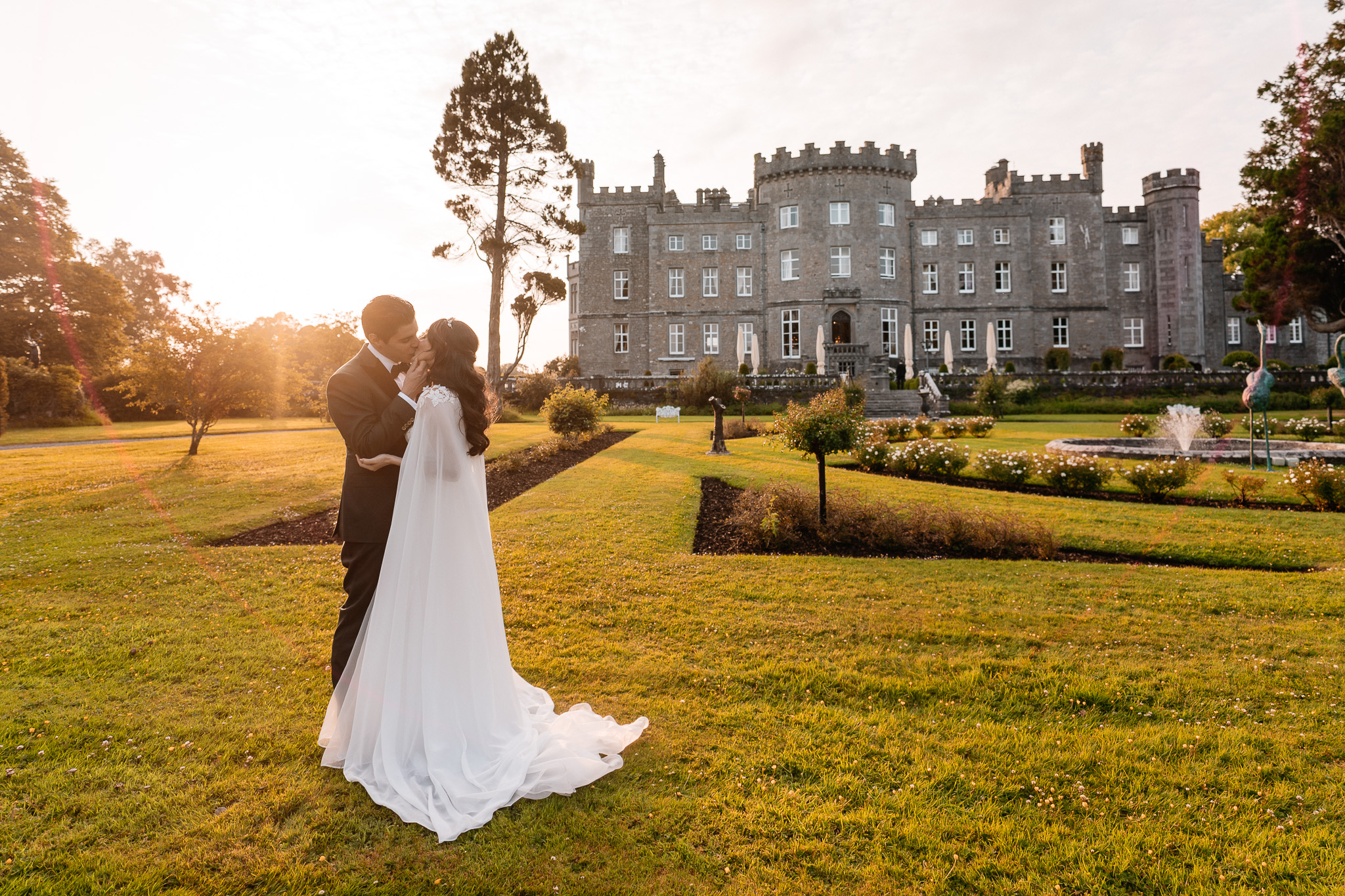
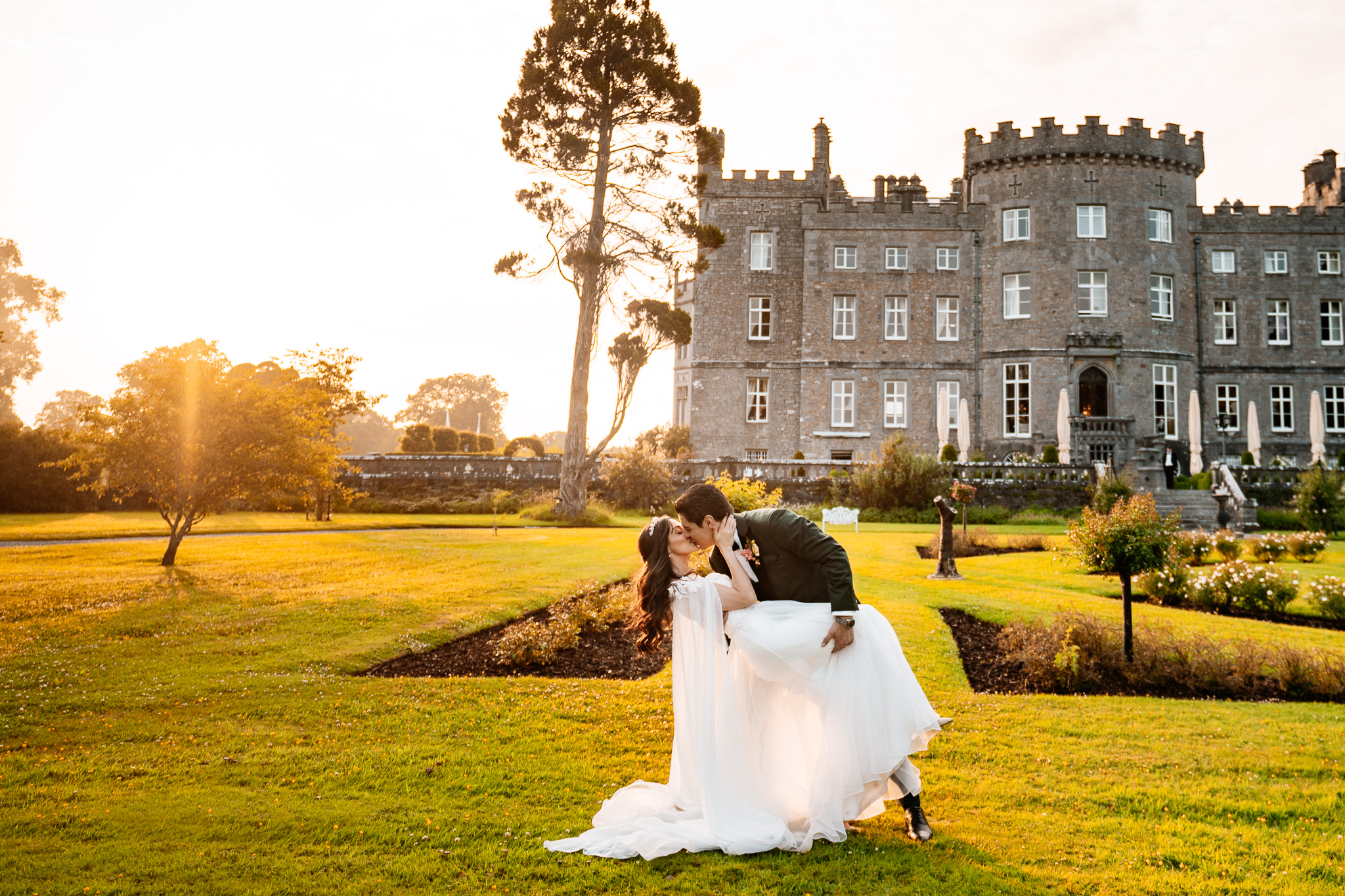
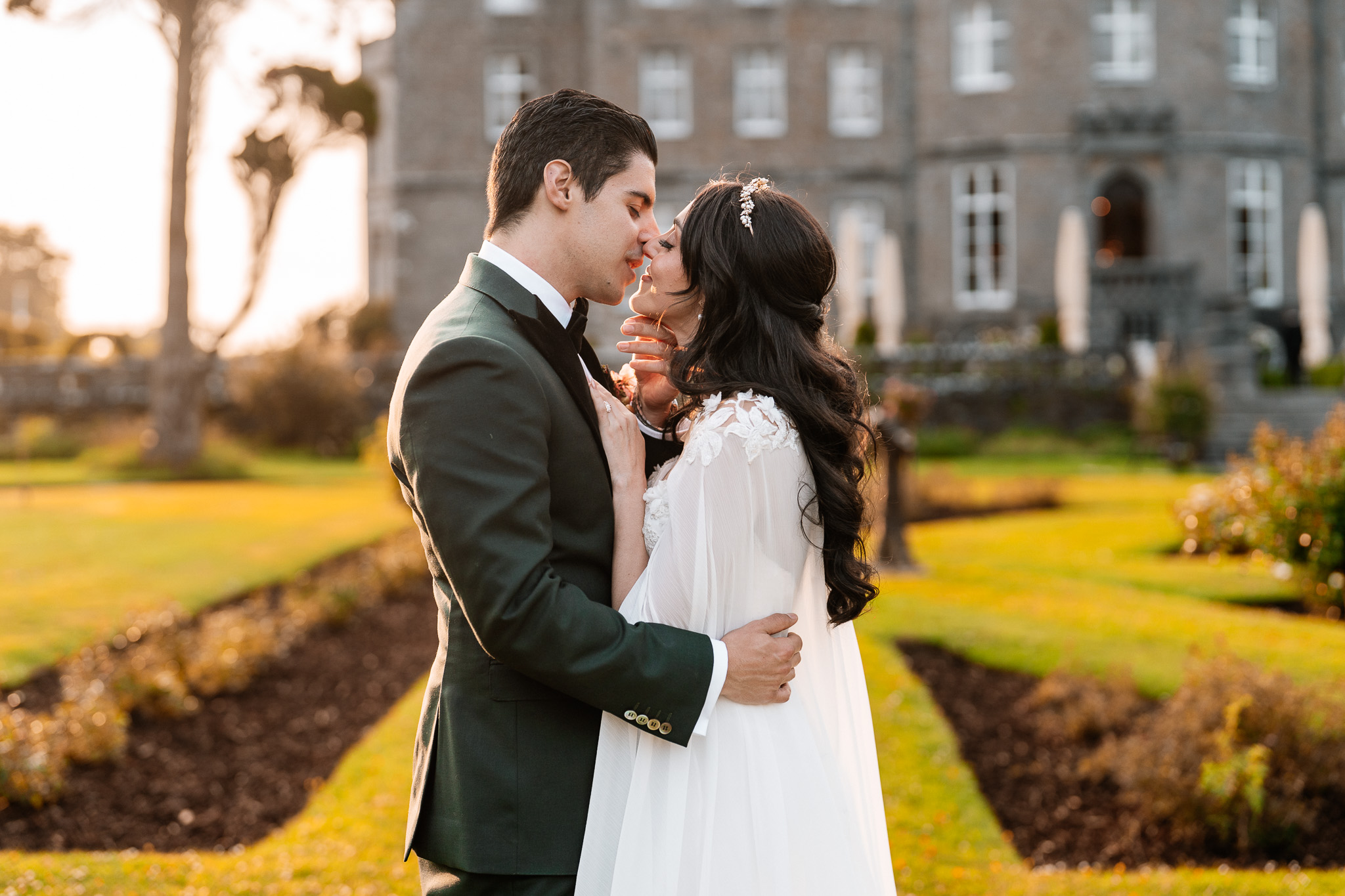
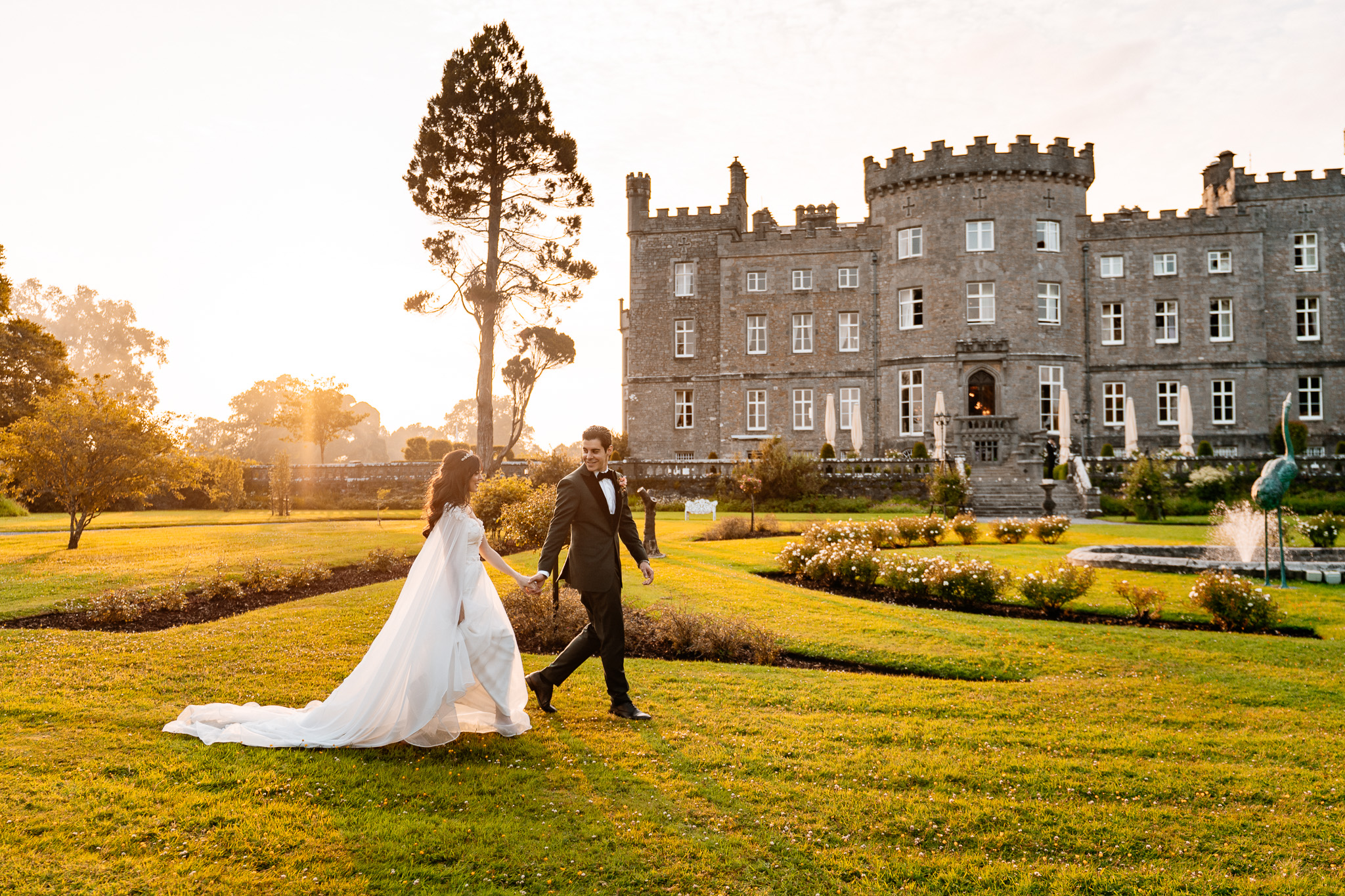
At venues such as Markree Castle, this can work particularly well. From the dining room, we can be outside and heading towards the gardens within moments. If I see that the evening light is becoming beautiful, I can ask the couple for another ten or fifteen minutes.
That short evening walk can give us completely different photographs in softer light, sometimes with a beautiful sunset, without taking the couple away from their reception for a long period of time.
This is why I prefer to think of couple portraits as small opportunities throughout the day rather than one large photography session that has to happen at a fixed time.
Before the wedding, I learn what matters to you. If you have travelled from abroad because you dreamed of getting married in an Irish castle, I know that photographs showing you together with the castle and landscape are likely to matter. If portraits are less important to you, I do not need to manufacture a long session simply because other couples have one.
When we do go for photographs, I work with purpose. I know the venue, I am watching the weather and the light, and I already have an idea of what we need.
Then I want to get you back to your guests.
The goal is not to make the portrait session as short as possible.
The goal is to give you the photographs that matter, use the best opportunities the day gives us, and take no more of your wedding away from you than we need.
THE DRINKS RECEPTION
Protect Your Time With Your Guests
Your drinks reception is not simply the space between the ceremony and dinner. For many couples, it is one of the few parts of the wedding day when there is nowhere they need to be.
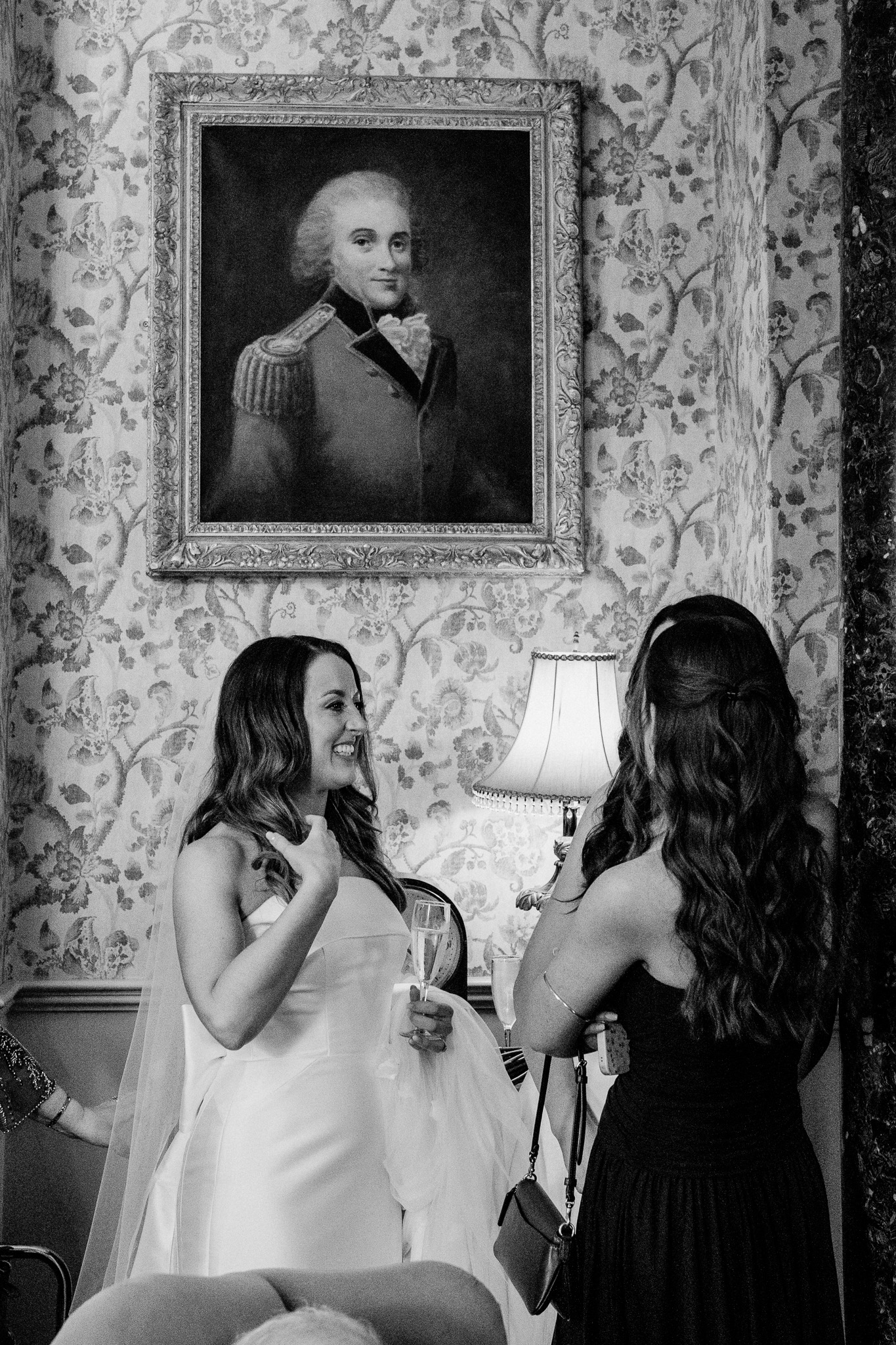
This is when you finally get to walk around, have a drink, talk to people and spend time with guests who may have travelled a very long way to celebrate with you.
I think that time is worth protecting.
When I look at a wedding timeline, I am always conscious of how much of the drinks reception is being taken away by family photographs, couple portraits or other planned parts of the day.
Sometimes a small adjustment can make a surprisingly big difference.
If the venue has flexibility and moving the call to dinner by thirty minutes works with the kitchen, speeches and the rest of the schedule, that extra half hour can give a couple something much more valuable than another photography slot: time with their guests.
This is always something to discuss with your venue rather than change independently. A wedding timeline involves the kitchen, coordinators, entertainment and many other people, and all of those parts need to work together.
But I do not think a timeline should become untouchable simply because it was written down several weeks before the wedding.
If the day is running beautifully, everyone is enjoying themselves and a small change is possible without creating problems later, sometimes the best decision is simply to give the couple more time to enjoy it.
A good wedding timeline should help you experience more of your wedding, not constantly pull you away from it.
QUIET MOMENTS
Protect the Time That Belongs to You
Not every quiet space in a wedding timeline needs to be filled.
Sometimes that space is there because you need it.
At Markree Castle, for example, the couple is traditionally given around thirty minutes to themselves before their entrance into the dining room.
I treat that half hour as theirs.
It is not an empty space in the timeline that I can fill with another portrait session. After spending so much of the day surrounded by people, the couple finally has a chance to step away, sit down in the Billiard Room, have a drink and simply be together.
When that half hour is over, they return to the hall, where the Markree team welcomes them and prepares them for one of my favourite transitions of the day: their entrance into the dining room with music and all of their guests waiting inside.
Unless there is a genuinely important reason, I do not interrupt that time for photographs.
And this principle is not only about Markree Castle.
Every wedding has moments when the best thing I can do as a photographer is recognise that you do not need me. You may need ten minutes alone together. You may need to sit down. You may simply need a drink and a chance to process everything that has happened.
A gap in the timeline is not automatically an opportunity for more photographs.
Sometimes the best decision a photographer can make is to recognise that a moment belongs to the couple, not to the camera.
DETAILS THAT MATTER
Photograph the Things You Chose to Invest In
Some parts of a wedding deserve to be photographed not because they appear on a standard photography checklist, but because they mattered enough to you to invest time, thought and money in them.
Flowers, table styling, stationery, the wedding cake and the way the dining room has been prepared can be a huge part of the celebration you created.
I pay attention to this before the wedding and throughout the day. If I know that these details are particularly important to you, I want your photographs to show more than the decorations on their own. Sometimes I also want to place the two of you inside the space you created.
This does not need to become another portrait session or another interruption to the wedding.
At Markree Castle, for example, I often use one of the natural transitions that already exists in the day.
Depending on the wedding, speeches may take place on the stairs, with guests gathering in the hall when the bell rings, or they may take place in the dining room after the couple’s entrance.
These transitions can sometimes give me a very small window to bring the couple into the prepared dining room for a few photographs without creating a separate photography session.
The tables are set, the flowers are in place, the cake is ready and the room can still be photographed as it was designed.
I may need the couple for only two or three minutes. We make a handful of photographs of them inside the space they spent months creating and then immediately continue with the natural flow of the day.
That distinction is important to me. I am not adding another photography session to the timeline. I am finding a small opportunity within something that is already happening.
Those two or three minutes can preserve something that took months to plan and a significant amount of money to create, without unnecessarily taking the couple away from their guests.
But I do not do this automatically with every couple.
Part of my job is understanding what matters to you. I learn that through our conversations before the wedding, the choices you have made and what I observe on the day.
If I can see that a particular part of your wedding really matters to you, I want to make sure it becomes part of the story.
The timeline should respond to your priorities rather than treating every wedding exactly the same.
EVENING LIGHT
Only Step Outside Again When the Light Is Worth It
If we already have beautiful photographs of the two of you from earlier in the day, I do not automatically take you away from your reception again just because sunset is approaching.
There needs to be a reason.
If the evening is simply overcast or the light is similar to what we have already worked with, I would much rather leave you with your guests. We already have the photographs, and another ten or fifteen minutes outside may add very little to your story.
But occasionally the light changes completely.
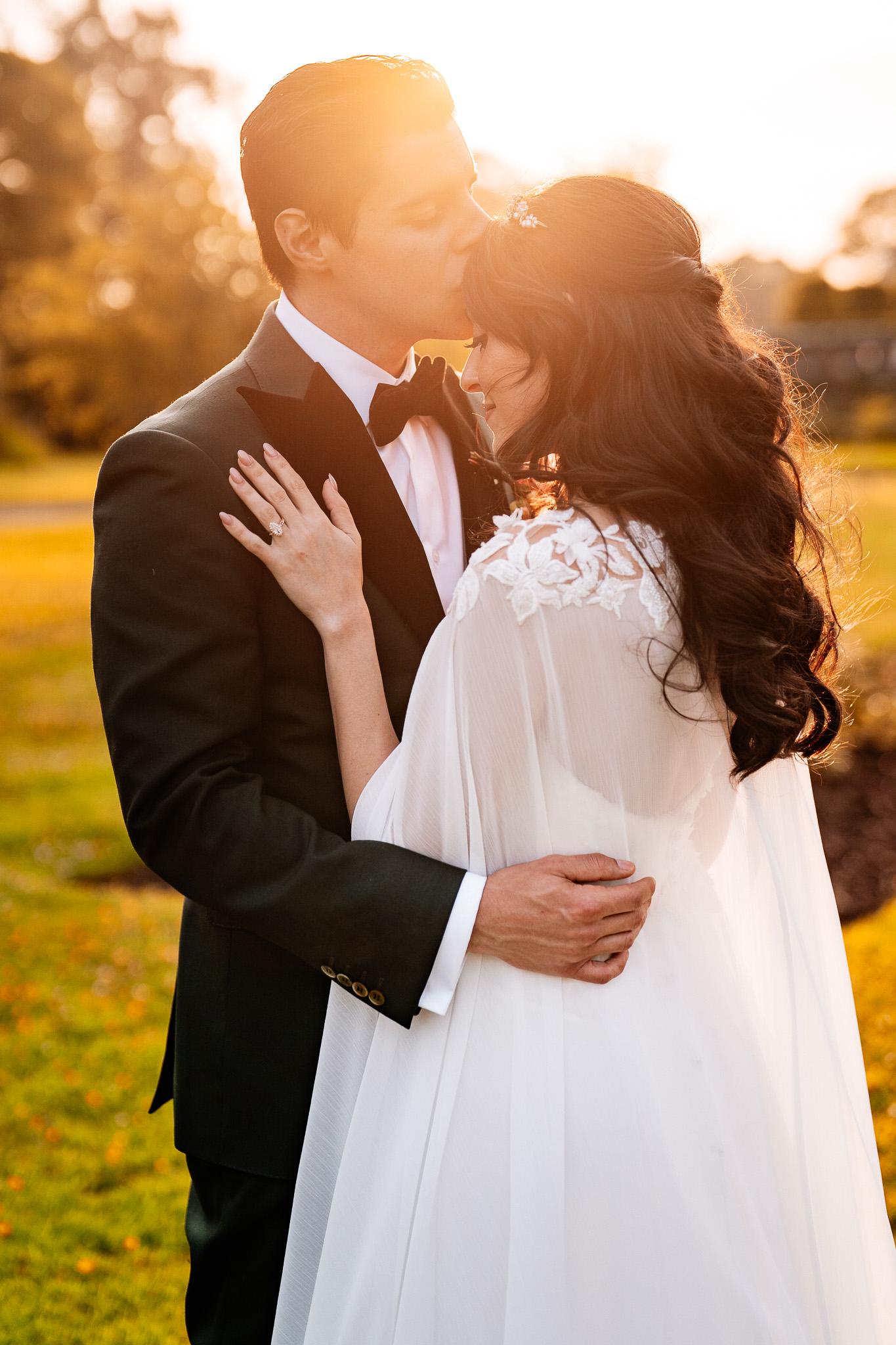
The sun may break through the clouds, the sky may develop beautiful colour, or that soft golden light may appear for just a few minutes.
When I see that, and I know it can give you something genuinely different from what we already have, I may come over and say, “Guys, we have beautiful light. Give me ten minutes.”
That is when it is worth going.
At Markree Castle, this can work particularly well because we can get outside very quickly. From the dining room, we can step onto the terrace and head towards the gardens within moments. We do not need to turn it into another long portrait session.
We use the light while it is there, make a small number of photographs and come straight back.
For me, this is an important distinction.
I do not take couples outside because the timeline says “sunset photographs”. I take them outside when the light gives us an opportunity that is genuinely worth taking them away from their wedding for.
If that opportunity does not appear, nothing is missing.
You already have your photographs.
Stay with your guests and enjoy your wedding.
WHEN PLANS MOVE
Build a Timeline That Can Handle Delays
Almost every wedding day moves slightly away from the original timeline at some point.
Hair and makeup may take longer than expected. A ceremony can start late. Family photographs may need a few extra minutes. The weather may change. Dinner may move slightly.
That is normal.
A good wedding timeline should be able to absorb some of those changes without making you feel that the day is suddenly going wrong.
This is another reason why I do not like filling every available minute in advance. When there is some breathing room, a ten or fifteen-minute delay is often just a small adjustment rather than a problem.
My job on the day is to keep reading what is happening and make decisions around it.
If we are running behind, I can shorten a portrait session, move some photographs until later, reorganise family photographs or simply decide that something we originally planned is no longer worth taking you away from your guests for.
But I am not making those decisions in isolation.
A wedding day works best when the photographer and the venue team communicate with each other.
At Markree Castle, for example, I work closely with the venue team throughout the day. They know what is happening with the guests, the kitchen, dinner, speeches and everything happening behind the scenes. I know where we are photographically and whether I genuinely need another five or ten minutes.
There is regular communication between us. The team may check whether I need more time, I may let them know that we are finished earlier than expected, or together we may decide that a small adjustment will make the next part of the day work better.
That relationship is incredibly valuable.
I have written more about the venue and how a wedding day works there in my Markree Castle wedding review.
When the photographer and venue team work together well, many small timing problems can be solved quietly in the background without the couple having to manage them.
What I do not want is for you to spend your wedding looking at the clock or trying to coordinate everyone yourself.
There are fixed parts of the day that matter, of course, but not every part of the original timeline needs to survive exactly as it was written.
If something changes, we communicate, adjust and keep the day moving.
The priority is not protecting the schedule.
The priority is protecting your experience of the day.
YOUR PRIORITIES
Your Timeline Should Reflect What Matters to You
There is no single perfect wedding timeline because there is no single version of a perfect wedding day.
Different couples care about different things.
For one couple, having photographs with the castle they travelled across the world to get married in may be incredibly important. For another, spending as much of the drinks reception as possible with friends and family matters far more than having a large collection of couple portraits.
Some couples have invested a huge amount of thought into flowers, styling and the dining room and want those choices to become part of their photographs. Others care very little about details but have family members travelling from different countries whom they rarely get to see.
All of those priorities are valid.
Even something as simple as congratulations after the ceremony can mean very different things to different couples.
I have noticed that for some couples, particularly those with strong local or family traditions, having every guest come over after the ceremony, shake their hand, hug them and personally congratulate them is genuinely important.
That may take time away from the drinks reception, but if that tradition matters to the couple, I would never try to remove it simply because another timeline might be more efficient.
For another couple, those same twenty or thirty minutes may be better spent having a drink and talking naturally with their guests.
Neither choice is wrong.
What matters is recognising which one matters to you.
This is why I try to understand these priorities before the wedding rather than discovering them halfway through the day.
Our conversations, your plans and the information you give me before the wedding help me understand what deserves time and what does not.
Then, on the wedding day, I combine that knowledge with what is actually happening.
The weather may change. The light may become beautiful. A conversation with your grandparents may be happening at exactly the moment we originally planned to take photographs. Your drinks reception may be going so well that interrupting it simply does not make sense.
A timeline gives us structure, but it should never stop us from recognising what is more important in the moment.
That is why two weddings at exactly the same venue can have completely different photography timelines.
The aim is not to make your wedding fit my photography.
The aim is to make my photography fit your wedding.
PRACTICAL TIMING
Leave an Hour Between Getting Dressed and Leaving for the Ceremony
One of the simplest pieces of advice I can give you for a relaxed wedding morning is this: whenever possible, aim to be in your dress around one hour before you need to leave for the ceremony.
If your ceremony is at the venue and you only need to walk downstairs or across the grounds, we work from that moment. If you have a thirty-minute journey to a church, we work backwards and include the travel time.
That hour does not mean an hour of photographs.
Quite the opposite.
There may still be a veil to put on, and sometimes a mum wants to help with it. I like to make a few bridal portraits, including the window portraits that have become an important part of my style. I also want to make sure we have photographs with parents and siblings and, when appropriate, at least one photograph with the bridesmaids.
These photographs do not need to take very long.
What matters just as much to me is protecting some quiet time at the end.
Ideally, I want the bride to have at least fifteen minutes when there is nothing else she needs to do. She can sit down, have a drink, spend time with her bridesmaids, take everything in and prepare herself emotionally for the ceremony.
That little buffer also protects us from all the completely normal things that happen on wedding mornings. Flowers get forgotten. A veil needs adjusting. Someone has disappeared with something we need.
The hour gives us room for real life.
It is not about getting you to the ceremony according to a stopwatch. It is about making sure you do not spend the final minutes before your wedding rushing from one task to another.
BEFORE THE CEREMONY
Consider a First Look If It Suits You
A First Look can completely change the rhythm of a wedding day, but I do not think every couple should have one.
For some couples, particularly those who want to spend as much of the drinks reception as possible with their guests, it can work brilliantly.
When we are using the First Look to create the main couple portraits, I normally like to have around thirty-five minutes with the couple afterwards. For me, that is usually enough time to create a strong and varied set of photographs without turning it into a long photoshoot.
If the couple also wants photographs with the bridal party before the ceremony, I usually allow another ten or fifteen minutes for those.
When we use that time well, there is often no need for another full couple session after the ceremony.
Afterwards, we can concentrate on the family photographs and then send the couple back to their guests. If genuinely beautiful evening light appears later, we may step outside for another ten or fifteen minutes and create something completely different in softer light.
For me, this is often the ideal combination: a meaningful portrait session around the First Look, plenty of time with your guests after the ceremony, and a very short evening session only if the light makes it worthwhile.
But a First Look does not have to work this way.
Some couples want the First Look to be exactly that: the moment they see each other, followed by only a few portraits. They may deliberately choose to keep their main couple session until after the ceremony.
Other couples may finish their First Look session feeling that they already have everything they wanted. Occasionally, the day itself gives us another opportunity later, or the couple decides they would love to spend another fifteen minutes exploring a different part of the venue.
That is completely fine.
The First Look gives us options. It does not lock us into a fixed photography plan.
Whatever we decide, I want the groom to be back at the ceremony location around thirty minutes before the ceremony begins. That gives him time to settle in, welcome guests as they arrive and experience that part of the day rather than appearing at the last moment.
I also want the bride to have time after the First Look.
She may want to fix her hair or makeup, check the dress, spend some time with her bridesmaids and simply settle emotionally again before the ceremony.
Weather matters here too.
Because all of this is happening before the ceremony, I am particularly careful with the dress. If the ground is wet or the wind is strong, I am perfectly happy to photograph indoors rather than take unnecessary risks. If we do go outside, I choose where we work very carefully.
A First Look can give us more freedom later in the day, but that does not make it the right choice for everyone.
For many couples, the tradition and emotion of seeing each other for the first time at the ceremony is incredibly important. I would never recommend giving that up simply because a First Look might make the photography timeline more convenient.
The question is not whether a First Look is better.
The question is whether it makes your wedding day better for you.
THE BIGGER PICTURE
Build the Day Around the Experience, Not the Photographs
Beautiful wedding photographs matter. They are what you will have when the day is over, and part of my job is to make sure the people, places and moments that mattered to you are preserved properly.
But I do not believe your wedding day should become a photoshoot.
The photographs should fit around the experience, not replace it.
That is why so many of the decisions I make during a wedding are not simply about where the best photograph might be.
Sometimes the right decision is to take you outside because the light has suddenly become extraordinary.
Sometimes it is to finish a portrait session after fifteen minutes because we already have what we need and your friends are waiting for you.
Sometimes it is to organise the family photographs immediately because everyone is already together.
And sometimes it is to put the camera down and leave you alone.
The more weddings I photograph, the more important this balance becomes to me. I explain that approach in more detail in my Markree Castle wedding photography guide.
I want to create photographs that show how beautiful your wedding looked, but I also want to photograph what it felt like. Some of those quieter, more emotional moments are also why I use black and white wedding photography when colour is not the most important part of the frame.
For that to happen, you need time to actually experience it.
You need to be able to have a drink with your friends, hug your parents, sit beside your new husband or wife for a few quiet minutes, laugh with your bridesmaids, talk to your grandparents and sometimes simply look around the room and realise that all of these people are there because of you.
Those are not interruptions to the photography.
They are the reason for it.
A good timeline gives us enough structure to make sure the important photographs happen, while leaving enough freedom for everything we could never have planned.
Because years from now, I do not only want you to remember how your wedding looked.
I want the photographs to bring you back to how it felt.
Planning Your Day
Frequently Asked Questions
How much time should we allow for couple photographs?
There is no single amount of time that works for every wedding. In many situations, fifteen to thirty-five well-used minutes can give us everything we need. If portraits are particularly important to you, we can deliberately allow more time. I would rather respond to your priorities, the venue, the weather and the light than keep you away from your guests simply because a photography slot was written into the timeline.
How early should I be ready before the ceremony?
Whenever possible, I recommend being in your wedding dress around one hour before you need to leave for the ceremony. This gives us time for the veil, a few bridal portraits, photographs with parents, siblings and bridesmaids, while still protecting around fifteen quiet minutes when you do not need to do anything at all.
Should we have a First Look?
Only if it suits the way you want to experience your wedding. A First Look can allow us to complete much of the couple photography before the ceremony and give you more time with your guests afterwards. For other couples, seeing each other for the first time during the ceremony is an important tradition they would never want to lose. Neither option is better. It depends on what matters to you.
Do we need sunset photographs?
No. If we already have beautiful photographs and the evening light gives us nothing significantly different, I would rather leave you with your guests. I will suggest stepping outside again only when I see genuinely beautiful light that makes those ten or fifteen minutes worthwhile.
How can we make family photographs faster?
Keep the formal family list focused and choose one person from each side of the family who knows everyone well. They can quickly identify and find anyone who is missing while I continue photographing. This simple preparation can save a surprising amount of time on the wedding day.
What happens if our wedding timeline starts running late?
We adapt. Wedding days rarely run exactly to the minute. I can shorten or move a portrait session, reorganise family photographs or work with your venue team to adjust the next part of the day. A good timeline should absorb small delays rather than make you feel that something has gone wrong.
Kind Words
What Couples Say
The photographs matter, but so does how the wedding day feels while they are being created.
When I was searching for a photographer I wanted someone to capture real moments, laughter, tears, those special looks between ourselves, family and guests. Wojciech did all this and more.
His professionalism and discretion made everything flow in a natural and easy way during the whole wedding. It was very easy to forget that he was present.
The wedding day was so so relaxed and I was so amazed to see so many photos afterwards that I didn’t even notice being taken.
Your Wedding
Let’s Build a Wedding Day That Feels Like Yours
You do not need to arrive with a perfect photography timeline. Tell me what matters to you, how you want your wedding to feel and which parts of the day you are most excited about.
From there, I can help you build a photography plan that gives us the photographs that matter without turning your wedding into a photoshoot.
Beautiful photographs, a complete story and enough space to actually experience the day you planned.
Tell Me About Your Wedding